


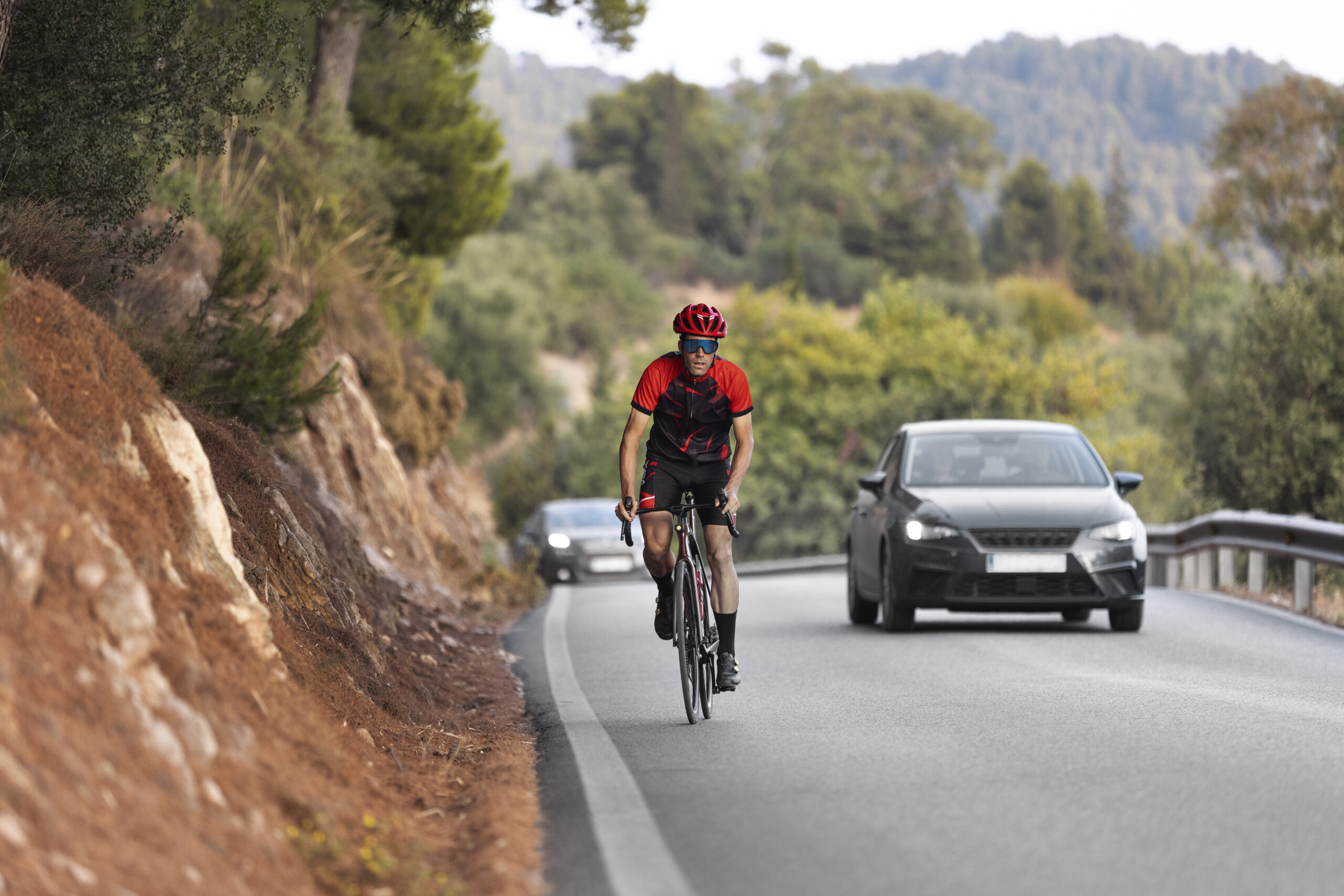
A car hit you while you were on your bike, and now everything feels uncertain: from the injuries and the bills to whether any of this is even worth fighting. That moment of impact changes things fast. What happens next depends a lot on what you do before you talk to any insurance company, sign anything, or assume you don’t have a case. We’ll break down exactly what matters after a bicycle crash in Arizona.
What to Do Right After a Bicycle Accident in Arizona
What happens in the next few minutes can make or break your case. Here’s what matters.
At the Scene
- Call the police. Get a report filed even if you feel okay. Without one, it’s your word against the driver’s.
- Don’t say you’re fine. Adrenaline masks injury. What you say at the scene can be used later to minimize your claim.
- Document everything. Photos of your bike, the car, road conditions, traffic signals. Take them before anything gets moved.
- Get the driver’s information. Insurance details, plate, phone number. Don’t rely on the police report alone.
- Find witnesses before they leave. Get names and numbers. An independent witness carries serious weight.
- Look for cameras nearby. Business cameras, Ring doorbells, traffic cams. Footage gets overwritten fast, sometimes within 24 hours.
In the Hours and Days After
- Get medical care right away. The gap between your crash and first doctor visit is one of the first things insurers look at when evaluating your claim.
- Tell your doctors everything. Tingling, headaches, trouble sleeping- if it wasn’t there before the crash, mention it. Documented symptoms are something your attorney can work with.
- Don’t give a recorded statement. Not to the driver’s insurer, not to your own, until you’ve spoken with a lawyer. These calls are designed to reduce what they pay you.
- Don’t sign anything, especially a HIPAA release from the other driver’s insurer. It hands them access to your full medical history.
Once you’ve handled the immediate steps, the next question is almost always the same one: whose fault is this, and does it even matter if you made a mistake too? Before we get into fault, it helps to know what the law actually expected from both of you at the moment of that crash.
Arizona Bicycle Laws That Actually Affect Your Case
Most people think bicycle laws only matter for traffic tickets. These same rules decide who is liable after a crash and how much you can recover.
Cyclists have the same road rights as drivers
Under A.R.S. § 28-812, a person riding a bicycle has the same rights and responsibilities as someone driving a car. It protects you when a driver fails to treat you as a legitimate road user, and it becomes relevant if the other side argues you were doing something wrong.
Where you can legally ride matters
In Phoenix, human-powered bicycles are permitted on sidewalks unless posted otherwise. E-bikes are generally not. Where you were riding at the moment of impact directly affects how liability gets analyzed.
Crosswalks shift protection toward cyclists.
When a cyclist enters a crosswalk, Arizona law treats them similarly to a pedestrian. Drivers turning at intersections must yield to anyone lawfully in that crosswalk. Not looking is not a defense.
The right-hook crash has a clear legal answer.
Under A.R.S. § 28-754, a driver can’t turn unless the movement can be made with reasonable safety, and must signal continuously for at least 100 feet before turning. A driver who passes you and cuts you off without confirming the lane was clear owns that collision. “I didn’t see them” doesn’t excuse skipping the signal or the safety check the law requires.
Now that you know what the law requires, here is how those rules actually determine who is responsible for what happened to you.
Who Is at Fault When a Car Hits a Cyclist in Arizona?
The honest answer is: it depends on what actually happened. A lot of cyclists assume that because a car hit them, the driver must be at fault. And a lot of drivers assume that if the cyclist was doing anything wrong, the cyclist takes the blame. Neither of those is how Arizona law actually works.
When the Driver Is Likely at Fault
Drivers cause the majority of car-bicycle crashes, and most of the time it comes down to not paying attention. Here are the situations we see most often.
- Right-hook crashes. The driver passes the cyclist, then turns right immediately after, cutting across the bike lane. As covered above, the law requires drivers to yield to cyclists before making that turn. Many drivers simply don’t look.
- Turning without checking. At intersections, drivers turning right on red often focus entirely on traffic coming from the left. They pull out without ever looking right at the crosswalk or bike lane. If a cyclist is already there, that is the driver’s failure to clear the intersection before moving.
- Dooring. A parked driver opens their car door directly into a cyclist’s path. Under A.R.S. § 28-905, a person in a parked vehicle cannot open a door on the traffic side unless it is reasonably safe to do so. When dooring causes a crash, liability typically falls on the person who opened the door.
- Running a red light or failing to yield. When a driver runs a signal or fails to yield at an intersection and hits a cyclist with the right of way, fault is usually clear. These cases often have witness accounts or camera footage to support them.
- Distracted driving. A driver looking at their phone, adjusting their GPS, or simply not paying attention to the road has no legal cover when they hit a cyclist. Distraction is not a defense.
When the Cyclist May Share Some Fault
Arizona law expects cyclists to follow the same traffic rules as drivers. When a cyclist breaks those rules, and a crash happens, that affects how fault gets divided.
- Running red lights or stop signs. Cyclists who enter an intersection against a signal take on some responsibility for what happens in that intersection.
- Riding against traffic. Arizona law requires cyclists on a roadway to ride in the same direction as traffic. Riding the wrong way reduces your visibility to drivers and can shift the fault toward you.
- Sidewalk and crosswalk violations. As covered above, where you were riding and whether you had a signal to cross both factor into the fault. If you were somewhere you weren’t legally permitted to be, or entered a crosswalk against the signal, that becomes part of the analysis.
- No lights at night. A.R.S. § 28-817 requires a front white light and rear red reflector after dark. Riding without them when visibility played a role in the crash can contribute to your fault percentage.
Shared Fault Is Common, and It Does Not End Your Claim
In Arizona, you can recover compensation even if you were partially at fault. The fault gets divided by percentage, and your recovery gets reduced by your share, not eliminated. If a driver was 80% at fault and you were 20%, you still recover 80% of your damages.
We have seen people walk away from valid claims because they assumed one mistake meant they had no case. If you were hurt, the question is not whether you were perfect. It is what the other driver did, and whether their actions contributed to your injuries. Insurance companies know comparative negligence well and will try to inflate your fault percentage to pay out less. A lot of injured cyclists find out about the fault for the first time when they hear what the police officer wrote down. The police report is not the final word.
The Police Report Says It Wasn’t the Driver’s Fault
Officers rarely see the crash. They write down what people tell them, and if you were the one in the ambulance, the driver’s version is often the only one in that report. A one-sided report is not a final verdict. Dashcam footage, security cameras, independent witnesses, and vehicle damage patterns can all contradict what an officer wrote, and attorneys use exactly that evidence to challenge reports that got it wrong. If the officer called it a civil dispute, that is more common than most people realize. Do not treat that report as the last word before speaking with an attorney.
Once the fault picture starts to clear, the next question is almost always about money, specifically, whose insurance actually covers a cyclist.
Does the Driver’s Car Insurance Cover a Cyclist?
Yes. The at-fault driver’s liability insurance covers cyclists the same way it covers anyone else they injure. If the driver caused the crash, their policy is the starting point for your medical bills, lost wages, and other damages.
If the driver has no insurance or not enough, your own auto policy may still help. Uninsured and underinsured motorist coverage can apply even when you were on a bike. MedPay coverage on your auto policy is another option worth checking.
No health insurance does not mean no options. Medical costs can be recovered through your claim, and there are providers who will treat you now and wait to be paid from your settlement. Knowing who pays is one piece. Knowing what you can actually recover is another.
What Compensation Can a Cyclist Recover in Arizona?
Most cyclists think about medical bills and their damaged bike. The full picture goes further.
Economic damages cover everything with a dollar amount: ER visits, surgery, imaging, physical therapy, future medical care, lost wages, lost earning capacity, and property damage, including your bike and helmet.
Non-economic damages cover pain and suffering, emotional distress, anxiety, PTSD, and loss of enjoyment of life. These are real, compensable, and often make up a significant portion of a settlement.
Every case is different, and no attorney can tell you what yours is worth upfront. The range of what cases settle for varies more than most people expect. Here is what actually drives that number.
What Affects the Value of a Bicycle Accident Settlement in Arizona?
Two crashes can look similar on the surface and settle for very different amounts. Here are the factors that actually move the number.
- How serious your injuries are. Severity drives value more than anything else. A broken collarbone, a herniated disc, a traumatic brain injury — each carries a different weight. Future care needs matter just as much as current bills. If your injuries will affect you a year from now, that belongs in your claim.
- How well your damages are documented. Insurance companies pay for what they can see. Medical records, treatment notes, imaging, therapy visits, and employer records showing missed work build the picture. Gaps in treatment or undocumented symptoms give insurers room to argue your injuries weren’t that serious.
- The fault split. Under Arizona’s comparative negligence law, your percentage of fault reduces your recovery. A strong evidentiary case that keeps your fault percentage low directly increases what you take home.
- The at-fault driver’s insurance limits. A driver carrying minimum coverage puts a ceiling on what their policy can pay. This is where your own UM/UIM coverage becomes important if their limits fall short of your actual damages.
That last factor is worth its own conversation, because most cyclists misunderstand what hiring an attorney actually means for their recovery.
What a Bicycle Accident Lawyer Actually Does for You
Many cyclists hesitate to call an attorney, thinking legal fees will reduce their recovery. It typically works the opposite way. Represented clients consistently recover more than those who handle claims alone, even after fees.
- We handle all insurance communication. Once you have an attorney, you stop talking to adjusters. Every question designed to minimize your injuries or shift blame goes through your lawyer instead.
- We work to try to find every liable party. The driver is not always the only one. An employer, a municipality, or a property owner may share liability depending on how the crash happened.
- We document what you would otherwise miss. Future care, pain and suffering, emotional distress, loss of enjoyment of life. Insurance companies do not volunteer these categories. An attorney builds them into your claim from the start.
You were just riding your bike. Someone else made a mistake, and now you’re dealing with injuries, bills, and a process you never asked to be part of. That’s not a situation you should have to figure out alone.
If a car hit you while cycling in Arizona, talking to an attorney costs nothing and can tell you a lot about where you actually stand. You may have more options than the police report, the insurance adjuster, or your own assumptions are leading you to believe.
At Esquire Law, our legal team handles bicycle accident cases across Arizona. A free case evaluation costs nothing and gives you a clearer picture of where you stand. A team member is available 24/7 to take your call.