


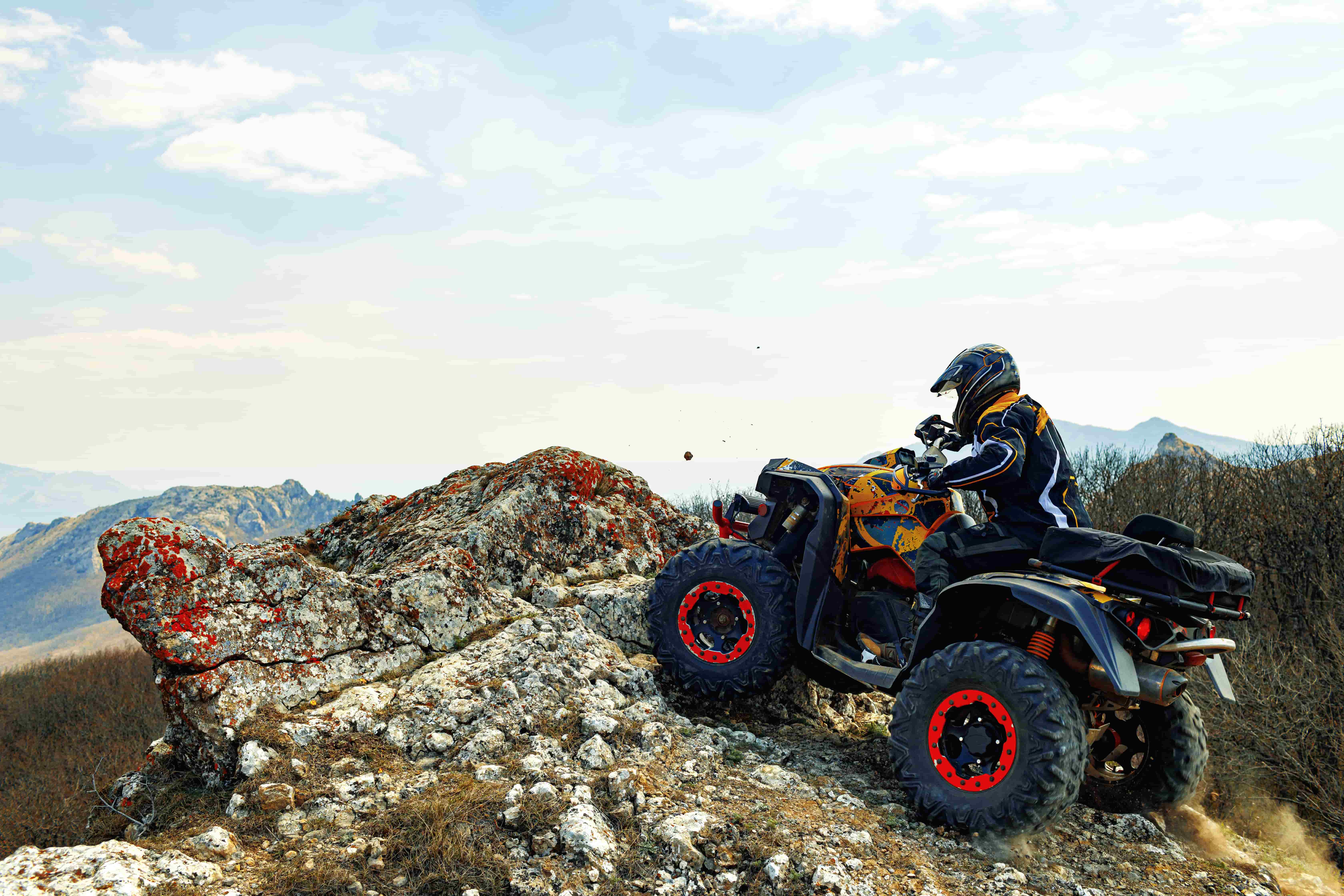
ATVs and side-by-sides are part of everyday life across Arizona, from desert trails outside Phoenix to private land and recreational areas statewide. They’re built for freedom and adventure, but when something goes wrong, the injuries are often serious, and the questions come fast.
We see many of the most severe ATV accidents happen far from highways or city streets. They happen off-road, often on private property, where insurance coverage, liability, and safety rules aren’t always clear. If you’re wondering whether this kind of crash is rare or just a stroke of bad luck, you’re not alone, and the reality may surprise you.
TL;DR: ATV Laws in Arizona
- Insurance: Arizona doesn’t require ATV or side-by-side owners to carry liability insurance, which means coverage gaps after a crash are common. Checking what insurance actually applies is often the first step in a claim.
- Laws to know: Arizona regulates ATVs and side-by-sides as off-highway vehicles, and riders generally need a valid driver’s license and a current OHV decal. Riders under 18 must wear a DOT-rated helmet in most situations.
What Counts as an ATV or Side-by-Side in Arizona?
After an ATV crash, one of the first questions is what the vehicle actually is under Arizona law. Arizona groups ATVs and side-by-sides together under one legal category: “off-highway vehicles,” or OHVs. Under Arizona Revised Statutes § 28-1171, this category covers ATVs, recreational and utility side-by-sides, dirt bikes, dune buggies, and similar vehicles built primarily for off-road, non-highway travel. The statute doesn’t spell out design differences between an ATV and a side-by-side; that distinction comes from manufacturer and industry standards, not from Arizona law itself. A traditional ATV is generally built for a rider who straddles the seat and steers with handlebars, while a side-by-side has bench or bucket seating, a steering wheel, and seat belts for each occupant.
Passenger rules, liability, and even insurance coverage often depend on this classification. Some ATVs are not built to carry passengers, which can raise fault issues if someone is riding improperly. Side-by-sides can carry multiple occupants, but only when passengers are seated and restrained as designed.
Arizona ATV Laws Riders Are Expected to Follow
Arizona regulates off-highway vehicles, or OHVs, under a separate set of statutes. ATVs and side-by-sides both fall under this OHV category, and knowing how these laws work helps explain why insurance issues and fault disputes come up so often after an ATV injury.
Licensing and Registration Requirements
Arizona law requires a valid driver’s license to operate an off-highway vehicle, including most ATVs and side-by-sides, under A.R.S. § 28-3151(C). This applies whether the vehicle is on a public road or a designated off-highway route. Riders also need a current Arizona OHV decal to use public and state trust land, and since January 1, 2025, getting or renewing that decal requires the registered owner to complete a free Arizona Game and Fish Department safety course.
Special rules apply to minors. For riders under 12, a citation for an OHV violation goes to the parent or guardian, not the child. For riders 12 to 15, either the minor or the parent or guardian can be cited, but not both. These rules matter in a claim because they can support holding a parent responsible when they let an underage or inexperienced rider operate an ATV.
ATV Insurance Requirements
Unlike drivers of passenger vehicles, Arizona does not require ATV or side-by-side owners and operators to carry liability insurance. Because there’s no mandatory coverage for off-highway vehicles, injured riders and passengers often discover there’s no clear policy in place to help with medical bills, lost income, or long-term injuries. This gap is one of the main reasons ATV injury claims can be more complicated and more contested from the start, and it’s often the first thing worth reviewing with a lawyer after a crash.
Safety and Equipment Laws That Still Apply
Even off-road, Arizona law sets baseline safety and equipment standards for off-highway vehicles under A.R.S. § 28-1179. These include functioning brakes capable of controlling and stopping the vehicle, headlights and taillights when operating between sunset and sunrise, a muffler or noise-suppression system that keeps sound at or below 96 decibels, and a spark arrestor approved by the U.S. Department of Agriculture. Riders heading into sand dunes or other designated areas also need a visibility flag mounted several feet high.
Arizona law adds one more requirement that’s easy to overlook: riders under 18 must wear a DOT-rated helmet when operating or riding on public or state land, unless they’re secured in a proper restraint system on a vehicle equipped with rollover protection. That helmet rule shows up often in cases involving teenage or underage riders, and a missing or improperly fitted helmet can become a real point of dispute after a crash.
Also, since January 1, 2025, getting or renewing an Arizona OHV decal requires the registered owner to complete a free Arizona Game and Fish Department safety course online.
Once you understand how thin that insurance coverage can be, the steps you take right after a crash become even more important, since they’re often what determines whether a claim holds up at all.
Why ATV Accidents Happen So Often in Arizona
ATV crashes aren’t rare outliers in Arizona, and the numbers back that up. According to Arizona’s 2024 crash data, all-terrain vehicles were involved in 171 reported crashes statewide, including 21 fatal crashes and more than 100 injury crashes. Those numbers may look small next to passenger cars, but they tell a different story when you consider how few ATVs are actually on the road or trails compared to everyday vehicles. When an ATV crash happens, the odds of serious injury or death are much higher.
From what we see in real cases across Phoenix and the rest of the state, the causes repeat themselves. Inexperienced or underage riders often underestimate how quickly an ATV can tip or lose control. Excess passengers change the balance of the vehicle and make rollovers far more likely. Speed, alcohol, and drugs remain a dangerous mix, especially on uneven terrain where there’s little room for error. Equipment failures and poor maintenance show up more often than people expect, particularly with older or borrowed ATVs. Add unsafe property conditions like unmarked trails, construction zones, or poorly maintained private land, and the risk increases fast. Many crashes also happen at crossings or shared roadways, where drivers in cars simply don’t see an ATV until it’s too late.
This also explains why Arizona’s ATV laws and safety rules come under close scrutiny after an accident.
ATV Accidents on Private Property: What Changes?
Many serious ATV accidents in Arizona happen on private land, such as ranches, desert lots, construction sites, or family property. That often leads injured riders to believe they have no legal options, especially if they had permission to be there. In reality, private property does not automatically eliminate liability.
Under Arizona premises liability law, property owners may still be responsible when unsafe conditions contribute to a crash, including unmarked hazards, poor maintenance, or allowing dangerous ATV use without warnings. Owners often argue assumed risk or rider fault, which can complicate these cases, but those defenses don’t automatically bar recovery.
Who Can Be Held Responsible for an ATV Accident?
ATV accidents rarely involve just one clear mistake. In many cases, more than one person or company shares responsibility, and identifying all liable parties is often the difference between a denied claim and real financial recovery.
Under Arizona law, responsibility can be divided among multiple parties, and you do not need to prove that one person was 100% at fault to have a valid case. Arizona follows a pure comparative negligence rule, which means injured riders can still recover compensation even if they share some responsibility for the crash. Any recovery is reduced by the percentage of fault assigned, but shared fault does not automatically end a claim.
Usually, the next parties might be involved:
The ATV Operator
When a rider speeds, ignores safety rules, carries passengers improperly, or rides under the influence, they may be held responsible for the injuries they cause. Operator negligence is one of the most common factors in Arizona ATV cases.
The ATV Owner (Negligent Entrustment or Failure to Maintain)
Sometimes the person who owns the ATV isn’t the one riding it. An owner can still be liable if they knowingly allow an inexperienced, underage, or impaired person to use the vehicle, or if they lend out an ATV they know is unsafe.
A Property Owner or Trail Operator
Many crashes happen on private land or maintained trails. Property owners and trail operators may be responsible when dangerous conditions, poor maintenance, or missing warnings contribute to an accident.
Another Vehicle Driver
ATV crashes don’t always involve just off-road vehicles. When a car or truck strikes an ATV at a crossing or shared roadway, the driver’s actions and awareness become a key part of the investigation.
An Employer
If an ATV is being used for work, such as ranching, construction, or security, an employer may be liable under Arizona law when job-related duties lead to injury.
The ATV or Parts Manufacturer
Defective brakes, throttles, steering components, or safety systems can place responsibility on manufacturers or parts suppliers. These cases often require technical analysis, but can be critical when equipment failure played a role.
Once potential liability is identified, and even when damages are clear, ATV claims often face obstacles that don’t exist in standard car accident cases.
What to Do After an ATV Accident in Arizona
After an ATV or side-by-side crash, the steps you take early can protect both your health and your legal rights. ATV accidents are handled differently from car crashes, so a few ATV-specific details matter more than people expect.
- Get medical help right away.
ATV crashes often involve rollovers, ejections, or hard impacts with the ground. Head, neck, and internal injuries may not show symptoms immediately. Getting checked creates a medical record that connects your injuries directly to the accident. - Report the accident when required.
If the crash involved serious injury, a fatality, or another vehicle, law enforcement should be notified. Even on private property, an official report can be critical when fault is later disputed. - Document the scene, terrain, and vehicle.
Take photos of the ATV or side-by-side, tire tracks, ground conditions, slopes, obstacles, and any safety equipment. Off-road terrain changes quickly, and conditions that caused the crash may disappear within hours. - Preserve the ATV and safety gear.
Do not repair or discard the ATV, helmet, or restraints right away. Mechanical failures, defective parts, or missing safety features often become central issues in ATV cases. - Avoid recorded statements or casual admissions.
Insurance adjusters or property owners may ask for statements early. Even simple comments can later be used to argue shared fault under Arizona law. - Speak with a lawyer before assuming fault.
ATV crashes often involve shared responsibility, hidden insurance coverage, or property liability issues. Getting guidance early helps protect your claim before evidence fades or deadlines are missed.
Even when the right steps are taken, the location of the crash can raise new legal questions, especially when it happens on private property.
Why ATV Accident Claims Are More Complicated Than Car Accidents
ATV injury claims often become complicated much faster than car accident cases. Unlike traffic crashes, there’s no standard playbook, and several issues tend to surface at the same time, especially when serious injuries are involved.
Limited or missing insurance coverage
Many ATVs aren’t insured at all. When no ATV policy exists, insurers and property owners frequently dispute whether any coverage applies, which can delay or derail a claim before it really begins.
More disputes over fault
Off-road crashes don’t involve traffic lights, lane markings, or clear right-of-way rules. Insurers often argue that the rider caused the accident, even when unsafe terrain, equipment issues, or another party’s actions played a role. Shared fault is common in ATV cases and can directly affect compensation.
Private property complications
A large number of ATV crashes happen on land owned by someone else. That raises questions about permission to ride, property maintenance, and whether hazards were properly addressed or warned about. These issues don’t exist in most car accident claims.
Equipment and product liability issues
When mechanical failures, defective parts, or design flaws are involved, responsibility may shift to manufacturers or suppliers. These cases require technical evidence and expert review, adding another layer of complexity.
Because these challenges often overlap, ATV accident claims usually require more investigation and strategy than a typical car crash. That’s where legal help comes in.
How an Arizona ATV Accident Lawyer Can Help
ATV accident cases are rarely straightforward. A clear, step-by-step approach helps protect your claim while giving you space to focus on recovery.
- Step 1: Identify all responsible parties
ATV crashes often involve more than one at-fault party. We look beyond the rider to determine whether a property owner, employer, vehicle owner, or manufacturer may share responsibility. - Step 2: Locate all available insurance coverage
Many ATV cases start with little or no obvious insurance. We review auto policies, homeowner’s insurance, umbrella coverage, and any commercial policies that may apply. - Step 3: Preserve evidence early
ATVs get repaired, terrain changes, and safety gear disappears. We move quickly to secure the vehicle, equipment, maintenance records, and scene conditions before critical proof is lost. - Step 4: Track deadlines and legal requirements
Arizona law imposes strict deadlines, including the two-year statute of limitations and shorter notice requirements in some cases. Missing a deadline can end a claim before it begins. - Step 5: Handle comparative fault arguments
Insurers often try to shift blame onto injured riders. We address shared fault issues using evidence and Arizona’s comparative negligence rules to protect your recovery. - Step 6: Take pressure off you and your family
From insurance communications to legal filings, we handle the process so you don’t have to manage it while dealing with injuries.
Talk With Us About Your ATV Accident
If you’ve been injured in an ATV or side-by-side accident, our team is here to help you understand your options. Our car accident lawyers know how Arizona’s ATV laws, insurance gaps, and fault rules affect real claims. There are no upfront costs and no obligation to move forward. Every case is different, and our focus is on guiding you through the legal process so you can concentrate on your recovery.