
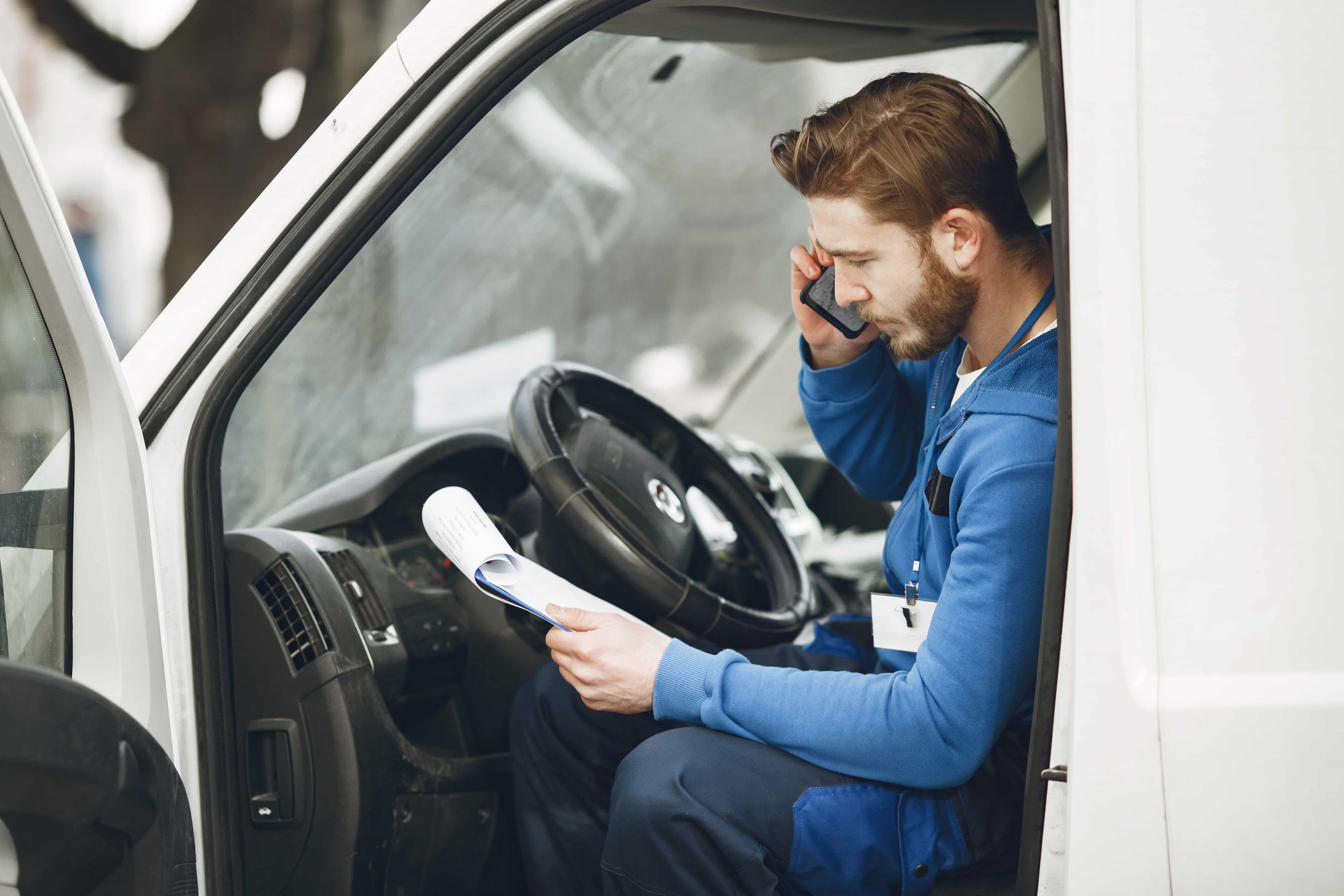
Getting hit by a commercial vehicle, whether it’s a delivery van, utility truck, or company car, can turn your life upside down in seconds. These crashes often lead to serious injuries, and the legal aftermath is rarely simple. Who’s responsible? The driver? The company? Their insurer? If you’re dealing with medical bills, lost income, and a pile of unanswered questions, in this guide, we’ll break down exactly what you need to know after a commercial vehicle accident in Arizona.
What Is Considered a Commercial Motor Vehicle Accident in Arizona?
Under Arizona Revised Statutes & 28-5201, a commercial motor vehicle (CMV) is any vehicle used for business, designed, kept, or run to haul people or goods for profit on public roads, unless it’s exempt from certain weight‑based fees. That means big rigs weighing over 26,001 pounds traveling within Arizona, or those over 10,001 pounds in interstate commerce, automatically count as commercial vehicles. But it’s not only about weight.
Even smaller vans or cars count if they’re registered or used by a company to deliver packages, carry employees, or transport supplies. Think Amazon delivery vans, buses, roofing contractors’ trucks, or even a company‑branded sedan, if it’s used for business, insurance and liability usually follow. That classification matters deeply in your injury claim.
Commercial fleets frequently carry higher insurance policies and may be required to follow stricter rules than regular passenger vehicles. That’s why it’s so important to confirm whether the vehicle that hit you is legally considered commercial. It can mean access to a larger insurance pool, but it can also come with tougher defenses and a more complex case than a regular car accident.
Why Commercial Vehicle Accidents Hit Harder Than Regular Crashes
Getting hit by a commercial vehicle isn’t like a typical car accident. The stakes are higher, the injuries are often more severe, and the legal fight can get complicated fast. Here’s why these cases are so different:
- More Serious Injuries: Commercial vehicles like semi-trucks, box trucks, delivery vans, and company work trucks are bigger, heavier, and harder to stop than passenger cars. When they hit, they hit hard. Victims often suffer from serious injuries such as traumatic brain injuries, spinal cord damage, or multiple fractures—injuries that can take months, sometimes years, to fully recover from.
- Corporate Insurance Teams Get Involved Fast: You’re not just dealing with the other driver’s personal insurance. You’re facing off against a company with corporate lawyers, investigators, and adjusters who move quickly to protect their interests.
- Multiple Parties Could Be Liable: In commercial crashes, responsibility doesn’t always stop with the driver. The employer, a contractor, maintenance crew, or even the company that loaded the truck could all be part of the picture. Each one brings another layer to the legal process.
- Stricter Regulations for Drivers: Commercial drivers with a commercial driving license must follow federal and Arizona-specific rules, including limits on driving hours, vehicle maintenance logs, licensing, and safety inspections. If they break these rules, it could help prove negligence and strengthen your claim, but it requires a legal strategy.
- Higher Insurance Policies, But More Pushback: Commercial vehicles often carry larger insurance policies, which can mean more compensation. But it also means the insurer has more to lose, and they’ll fight harder to avoid paying.
Understanding how severe these crashes can be naturally raises another question: who’s responsible when things go wrong?
Who’s Really Responsible After a Commercial Vehicle Crash?
After a commercial vehicle crash, figuring out who’s at fault isn’t always as clear as it seems. Overall, there might be defined a few common liable parties in a commercial accident:
When the Driver and Their Employer Are Liable
If the crash happened while the driver was working, the employer is usually on the hook. Whether it was speeding, distracted driving, or an illegal turn, the company’s policies, training, and scheduling might have contributed. Arizona law allows injury victims to hold the company responsible, not just the driver behind the wheel.
When the Vehicle Itself Is the Problem
There might be cases where a crash wasn’t just about bad driving, but it was worn-out brakes, faulty steering, or a blown tire. In these cases, the company that owns the vehicle, or the mechanic who last serviced it, could be liable for poor maintenance or negligent repairs.
When Other Parties Contribute
Commercial vehicles often involve multiple companies behind the scenes. The vehicle may be leased, the cargo loaded by a third-party crew, or operated by a subcontractor. If cargo shifts mid-transit or wasn’t secured properly, the people responsible for loading could be held accountable for the crash.
After an accident, companies often scramble to protect themselves. Some will claim the driver wasn’t on the job or wasn’t a “real” employee, but just a contractor. Others delay handing over records or shift responsibility to other vendors. That’s why it’s critical to get a lawyer who knows how to uncover who’s really liable to get your full compensation.
What Can Be Compensated for After a Commercial Vehicle Crash
If a commercial vehicle crash has upended your life, you deserve more than just a repair check for your car. As we’ve mentioned, these crashes often bring serious injuries, missed work, and long-term changes to how you live. Under Arizona law, you have the right to seek full compensation for what you’ve lost and what you may still face.
- Medical Expenses: This includes everything from the ambulance ride to emergency care, surgeries, rehab, and future treatment. If your injuries require ongoing care or future procedures, that should be part of your claim.
- Lost Income and Earning Capacity: If you’ve missed days or weeks of work, you can recover those lost wages. But it doesn’t stop there. If your injuries prevent you from returning to your old job or limit how much you can earn going forward, your settlement should reflect that.
- Pain and Suffering: Physical pain is real, and so is emotional trauma. Anxiety, PTSD, sleep issues, and depression after a serious crash are common and compensable. You shouldn’t be expected to “just move on” without support.
- Property Damage: Whether your car was totaled or your personal items were damaged during the crash, you have the right to recover the full value of what was lost.
- Wrongful Death: If you lost a loved one in a commercial vehicle crash, Arizona law allows you to recover for funeral expenses, loss of companionship, and financial support the person would have provided.
- Punitive Damages: In rare but serious cases, like when a company knowingly sent an unsafe driver on the road or ignored critical safety issues, you may be able to pursue punitive damages meant to punish reckless or intentional conduct.
Knowing what you can recover is important, but getting it depends on the steps you take, starting from the moment the crash happens. Here’s what to do right after the accident to protect your claim.
What to Do Right After a Commercial Vehicle Crash
The moments after a crash with a commercial vehicle are chaotic, but what you do next can shape your entire case. These aren’t just accidents with everyday drivers. You’re dealing with a business, its insurance provider, and a vehicle that might be backed by a national corporation. Every step matters.
- Make Safety the Priority: If you’re able, move to a safe place and check for injuries. Call 911 right away. Police reports are key in commercial cases. Emergency responders will also document injuries, which helps later if symptoms worsen.
- Start Documenting Immediately: Take photos of the vehicles, road conditions, your injuries, and the surrounding scene. Look for logos or business names on the truck or van. Write down the license plate, DOT number, and snap pictures of any documents the driver has showing who they work for. That early evidence can be critical later.
- Don’t Talk to Their Employer or Insurer Yet: You might get a call from the driver’s company or their insurance rep, asking for your version of events. You don’t have to give a statement, and you shouldn’t without legal guidance. They’re trained to protect their bottom line, not your recovery.
- Report to Your Own Insurer: You do need to let your insurer know about the crash, but keep your report brief and factual. Avoid guessing or saying anything that might later be used against you.
- Call a Lawyer Early: Commercial claims move fast, and not in your favor. The company behind that truck or van may send an insurance adjuster or investigator to the scene within hours. Their goal isn’t to help you. It’s to limit their payout. Adjusters might show up while victims are still shaken, pressuring them to answer questions or sign a release on the spot. That release? It waives your rights, often before you even know the full extent of your injuries. Don’t do it. Don’t give a statement. And don’t take their first offer. The earlier you have legal support, the better your chance of protecting critical evidence, identifying who’s truly responsible, and getting every dollar you’re owed. Even a short delay can cost you.
Once you’ve handled the immediate aftermath, it’s time to think long-term.
What to Know About Commercial Vehicle Claims, and the Critical Moves That Protect Your Case
Once you’ve made it through the immediate chaos of a commercial vehicle crash, your next steps are all about strategy:
Step 1: Act Fast to Preserve Evidence
Many commercial companies only keep GPS data, dashcam footage, and driver logs for a limited time. If no legal action is taken, that information may be deleted. Your lawyer can send preservation letters to lock down those records before they’re gone.
Watch out: If you wait too long, key evidence may disappear, taking your case with it.
Step 2: Let Your Lawyer Handle Communication
You’ll likely get a call from the driver’s employer or their insurer soon after the crash. Don’t answer their questions or agree to anything without legal counsel. They’re trained to minimize payouts and shift blame, and often before you’ve even seen a doctor twice.
Watch out: Even casual statements can be used against you. Let your lawyer handle all communication from day one.
Step 3: Identify Everyone Who Might Be Liable
It’s almost never just the driver. Commercial vehicle claims may involve their employer, a vehicle leasing company, a third-party maintenance crew, or whoever loaded the truck. Your legal team will need to trace ownership, contracts, and relationships to uncover all potential sources of compensation.
Watch out: Companies often try to label drivers as “independent contractors” to avoid responsibility. Getting to the truth early is key.
Step 4: Build a Claim That Covers Long-Term Needs
Before any claim is filed, your lawyer should fully evaluate your injuries, medical prognosis, lost wages, and any future limitations. This ensures that your claim reflects the full impact the crash has had and will continue to have on your life.
Watch out: Don’t rush into a quick settlement that only covers today’s costs. Once you accept, you waive your rights to anything further.
Step 5: File the Claim the Right Way
Now that the groundwork is in place, your attorney will file the claim with the appropriate parties, often multiple insurers or companies. This isn’t just paperwork. It’s a legal strategy that lays out your damages, documents the company’s negligence, and demands full accountability.
Watch out: Commercial insurers know every loophole. Filing late, naming the wrong party, or missing key records can delay or deny your claim. The way it’s filed matters.
Each of these steps gives you more control over your case and pushes back against the corporate machine working to protect its bottom line. When we take on a commercial accident case, we treat it like what it is: a fight for your future.
How a Lawyer Can Protect You After a Commercial Vehicle Crash, and How We Can Step In
Commercial vehicle cases aren’t built like typical accident claims. You’re going up against a business with a legal team, an insurance company trained to limit payouts, and policies designed to shift blame. You shouldn’t be doing this alone, especially while you’re recovering from injuries, managing bills, or taking care of your family.
At Esquire Law, when we take on a commercial crash case, we move fast. We immediately send out preservation letters to lock down key evidence. We investigate every angle to find out who’s really responsible. We also deal directly with the company’s insurer, so you don’t have to. From day one, we handle the calls, the paperwork, and the negotiations, protecting you from tactics designed to get you to settle too early or for too little. And if they won’t do what’s right, we’re ready to take them to court.
Every commercial case we handle is personal. You didn’t ask for this crash. You don’t deserve to fight uphill for help. Our car accident lawyers team at Esquire Law is here to make sure you’re treated like a person, not a claim number, and that you get the full compensation the law allows. We offer free consultations, and you don’t pay us anything up front. Give us a call today!