


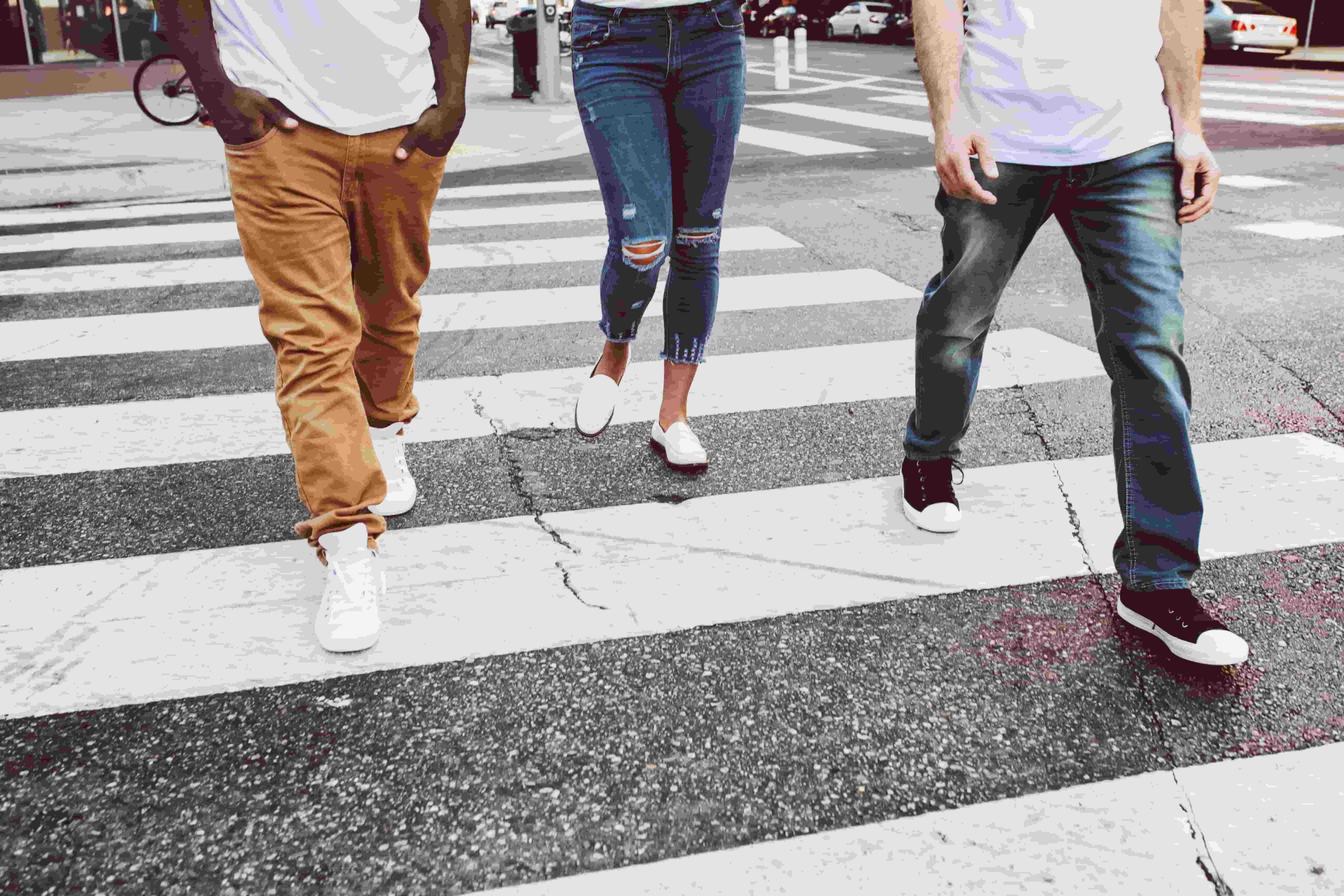
Getting hit by a car while you’re walking is disorienting in a way that’s hard to explain until it happens to you. One second you’re crossing the street, and the next you’re trying to figure out if you’re hurt, whether it was your fault, and what you’re supposed to do next. We talk to people in exactly this situation often, and the choices you make in the first few hours matter more than most people expect. In this guide, we walk you through what to do right after the crash, how fault and insurance actually work in Arizona, and what affects what your case is worth.
Before we get into any of that, here are the fast answers to what’s probably going through your head right now.
Quick Answers If You Were Just Hit
If you’re reading this with your phone in one hand and your head still spinning, start here.
- Yes, you can still have a claim, even if you were jaywalking or crossing outside a crosswalk. Arizona lets you recover compensation even when you share some of the blame. It may reduce what you can recover, but it doesn’t erase your case.
- Arizona is not a no-fault state, but an at-fault state. The driver who hit you, or their insurance company, is generally who pays, not your own policy first.
- No one can honestly tell you what your case is worth today, not the adjuster calling you, and not us either. It depends on your injuries, your treatment, and the evidence, and that takes time to come together.
- Don’t give a recorded statement to the driver’s insurance company before you understand what you’re agreeing to.
Now let’s walk through what actually happens first.
The First Steps After You’re Hit
The first hour after you’re hit sets the tone
- Call 911 and Stay at the Scene (if it’s safe)
Call 911 even if you feel like you can walk away from this. Arizona law requires the driver to stop and stay at the scene. It also gets you a police report, which matters more than most people expect once insurance gets involved. Avoid chasing the driver or confronting them yourself. Let the police handle that part. - Get Medical Care the Same Day, Even If You Feel Fine
Adrenaline hides pain well, and injuries like whiplash or head trauma often don’t show up until hours or days later. Getting checked out the same day protects your health and creates a medical record tying your injuries to the crash. Moreover, insurance companies watch closely for gaps in treatment, and they’ll use any delay against you. - Document the Scene Before You Leave
If you’re able, take photos of the vehicle, your injuries, the road, and the lighting. Get names and numbers from anyone who saw it happen, since witnesses get harder to reach the longer you wait. If there’s a business nearby, ask about surveillance footage right away. It can get erased within days. Before you leave, grab the police report number, the other driver’s contact information, insurance information, and the license plate number. - What to Do If the Driver Left, or Came Back
If the driver takes off, note whatever you can: plate number, color, make, anything. Leaving the scene of an accident that injures someone is a serious crime in Arizona, not just a traffic violation. If the driver comes back and seems agitated, keep your distance and let 911 know.
Am I At Fault If I Was Jaywalking?
Not automatically, and that fear alone stops a lot of people from even picking up the phone. Crossing outside a crosswalk or mid-block might make you partly responsible. Sharing some blame does not mean carrying all of it.
Arizona follows pure comparative negligence, so fault gets split by percentage here, not decided as all-or-nothing. A driver who was speeding, distracted, or not watching the road can still carry real responsibility, even if you were somewhere you technically shouldn’t have been.
A jaywalking ticket and a personal injury claim are two separate things. Getting cited doesn’t decide who pays your medical bills. Insurers will point to it, for sure, but it’s one piece of evidence, not the final word. We’ve talked to people who assumed a ticket meant their case was already over. It wasn’t, and it usually isn’t.
Arizona’s law on this, A.R.S. § 28-793, technically says a pedestrian crossing outside a crosswalk has to yield to traffic. That’s the “jaywalking” rule people mean, even though the word never actually shows up in the statute. Yielding the right of way isn’t the same as being fully at fault, though. Drivers still have to use due care under Arizona law no matter where you crossed. Our guide on Arizona pedestrian and jaywalking laws breaks this down in more depth if you want the full picture.
That still leaves a bigger question hanging over all of this: does the driver automatically carry the blame just because they were behind the wheel?
Is a Driver Always at Fault When They Hit a Pedestrian?
No, and that catches people off guard on both sides of this question. Being behind the wheel doesn’t automatically make a driver responsible just because someone got hurt.
Arizona law still puts a real duty on drivers. Under A.R.S. § 28-794, every driver has to use due care to avoid colliding with a pedestrian. That means slowing down, watching for kids near schools, and paying extra attention around anyone who looks confused or unsteady on their feet.
Fault comes down to the facts, not the fact that a car was involved. Was the driver speeding, distracted, or running a light? Or did the pedestrian step out somewhere a driver truly couldn’t react in time? Both questions get asked, and insurance adjusters weigh both sides too.
Evidence only helps if there’s a driver still around to hold accountable, though. So what happens when there isn’t?
If the Driver Fled or Wasn’t Insured
A hit-and-run adds a whole new layer of fear onto an already terrible day. You did nothing wrong, and now the person responsible for it is just gone.
This is exactly where your own insurance can step in. Uninsured motorist coverage, or UM, exists for this moment. It kicks in when the driver can’t be identified or never carried insurance at all.
Underinsured motorist coverage, UIM, covers the gap when a driver does have insurance but not nearly enough. Arizona only requires drivers to carry $25,000 per person in bodily injury coverage. That runs out fast against real medical bills, especially with an ER visit or surgery involved.
Insurance companies in Arizona have to offer you UM and UIM coverage when you buy a policy. A lot of people turned it down without realizing it, sometimes just by signing a form years ago. Pull out your own policy and check, because this coverage can end up being the only real path to compensation after a hit-and-run.
Sometimes, though, the driver isn’t the only party who might owe you something.
Who Else Might Be Responsible When a Pedestrian Is Struck?
Sometimes the driver isn’t the only one who played a part, and it’s worth asking. When poor road design or maintenance contributes to a crash, the city, county, or state might carry some of the responsibility too. Missing crosswalk paint, a malfunctioning signal, or overgrown landscaping blocking a driver’s view are all worth documenting alongside everything else from the scene.
Claims against a government entity work differently, though, and the clock moves much faster. Arizona requires a formal Notice of Claim within 180 days under A.R.S. § 12-821.01, not the usual two years you’d get with a private driver. Miss that window, and the claim is gone. That notice also has to spell out specific facts about what happened and why the entity is responsible. This isn’t something to draft alone at your kitchen table a week after a crash.
Once you know who might actually be paying for this, the next question becomes just as important: what can you even recover in the first place?
What Damages Can You Recover as a Pedestrian?
Getting hit by a car costs you in ways that go far beyond the ER bill, and Arizona law recognizes that. Compensation in a pedestrian claim generally falls into a few categories, and it helps to know what each one actually covers.
Economic Damages
This is the part you can put a number on. It covers your medical bills, both what you’ve already paid and what future treatment might cost. It also covers lost income if your injuries kept you out of work, plus any damage to your phone, bike, or bag that got wrecked along with you.
Non-Economic Damages
This part is harder to add up, but it counts just as much. Pain and suffering, such as the fear of crossing a street again, sleepless nights, missed time with your kids, all of it falls here. Documenting how the crash changed your daily life, not just your body, plays a real part in this conversation.
Punitive Damages (Rare Cases)
In rare situations, like a drunk or reckless driver, additional damages may come into play. These exist to punish extreme conduct. They’re the exception here, not the rule.
None of this comes with a set number attached to it. Every case depends on your injuries, your treatment, and the evidence behind it. So what actually moves that number up or down? A few key factors do most of the work.
What Affects the Value of a Pedestrian Accident Claim in Arizona
If you’re wondering what your pedestrian settlement might be worth, you’re not alone. It’s one of the first questions almost everyone asks after being hit, and understandably so. A pedestrian case doesn’t work quite like a typical car-versus-car claim, so a few pedestrian-specific factors carry real weight here.
How Severe the Impact Was on Your Body
Unlike two cars colliding, you didn’t have a seatbelt, an airbag, or a metal frame absorbing that impact. Pedestrians tend to walk away with more serious injuries: fractures, road rash, head trauma, or being knocked off their feet entirely. That difference alone often pushes a pedestrian claim into a different range than a typical fender bender.
Where You Were Hit
A crash in a marked crosswalk with a walk signal looks very different from one that happened mid-block. It’s not that one situation has no value and the other has all of it, but where you were standing shapes how quickly insurance accepts fault.
The Driver’s Coverage, and Yours
Pedestrians don’t carry their own liability coverage for this the way drivers do, so you’re often relying entirely on the driver’s policy, or your own UM/UIM coverage, if they fled or carried too little. Arizona’s minimum limits are low, and pedestrian injuries tend to run high, so this gap matters more here than in most vehicle-only crashes.
How Complete Your Treatment Is
Pedestrian injuries often need more than a single ER visit to fully diagnose. A fracture might need orthopedic follow-up, a head injury might need imaging and a neurologist, and road rash might need wound care over weeks. Finishing that full course of treatment, not just the first visit, builds a much stronger record.
Whether You’re Left With Lasting Effects
A break that heals cleanly in eight weeks tells a different story than a knee that never quite works the same, or a scar that doesn’t fade. Long-term or permanent effects change the entire conversation, which is part of why treating fully before settling matters so much here.
How Well Your Losses Are Documented
Missed work, a cane or walking boot you needed for weeks, a bike or phone that got destroyed alongside you- all of it matters, but only with something to back it up. A doctor’s note keeping you off your feet carries far more weight than simply saying you couldn’t get around.
Your Percentage of Fault
Under Arizona’s comparative negligence rule, any fault assigned to you reduces your recovery rather than erasing it. Even so, a jaywalking citation with 10% fault attached plays out very differently than one where you’re found mostly responsible.
None of these factors work alone, and insurance adjusters weigh all of them together before making an offer. That’s exactly why the first number they offer rarely reflects what a pedestrian case is actually worth.
A lot of that gap comes down to timing and a few avoidable missteps, not just the injury itself
Common Mistakes People Make After Getting Hit as a Pedestrian
We’ve seen the same handful of mistakes come up again and again, usually made with good intentions in a moment that’s anything but normal. None of them make someone a bad person or a bad case. They just tend to make an already hard situation harder. Here’s what to watch for.
- Assuming a parking lot or private property changes anything.
A driver’s duty to stop after hitting someone is the same whether it happened on a busy street or outside a gas station pump. - Believing a citation, or even the threat of one, ends your case.
Arizona’s comparative negligence rule means shared fault reduces what you can recover. It doesn’t wipe the claim out entirely. - Confronting or chasing a driver who’s aggressive or fleeing.
Wanting answers right away is natural, but your safety matters more than getting them in that moment. - Trusting that a favorable police report is the end of the story.
Officers usually write down what they’re told, not what a camera or an independent witness actually saw. A report can be challenged with real evidence. - Talking yourself out of getting checked out because you feel okay.
Some of the most serious pedestrian injuries take a days or even weeks to fully show themselves, long after the shock wears off. - Letting a slow moment turn into a rushed decision later.
Accepting an early settlement offer before treatment is finished tends to undervalue what an injury actually costs long-term. - Assuming small details don’t matter.
A missed workout, a canceled plan, a job you turned down because of pain- these things add up, but only if you write them down while they’re still fresh.
None of this comes down to fault or bad judgment. It’s just how much of this process nobody explains upfront, until you’re already living through it. That’s exactly the gap we spend most of our time closing for people who call us after this happens.
How Our Pedestrian Accident Lawyers Help
Getting hit by a car is disorienting enough without also feeling like the whole system is stacked against you. We step in early to take that weight off your shoulders, so you can actually focus on healing instead of chasing paperwork and returning phone calls with questions you don’t know how to answer.
Our pedestrian accident lawyers handle the parts most people don’t expect. That means requesting surveillance footage before it gets erased, tracking down witnesses while their memory is still fresh, and pulling the police report along with any body-camera footage that exists. We also deal directly with the insurance company, so you’re not left wondering what you can safely say or worrying that one offhand comment gets used against you later. If the driver fled the scene or didn’t carry enough coverage, we dig into your own UM and UIM policy to see what that opens up for you.
Every pedestrian case looks different to us, because every person’s situation actually is different. We don’t rush a case toward settlement before we fully understand your treatment and everything it’s cost you. Our job is to build the strongest version of your case, then pursue the compensation Arizona law allows you to recover.
If a car hit you while you were walking, you shouldn’t have to sort through all of this on your own. A quick, free case evaluation with our team can tell you exactly where you stand.
A few more questions come up almost every time we sit down with someone going through this.