


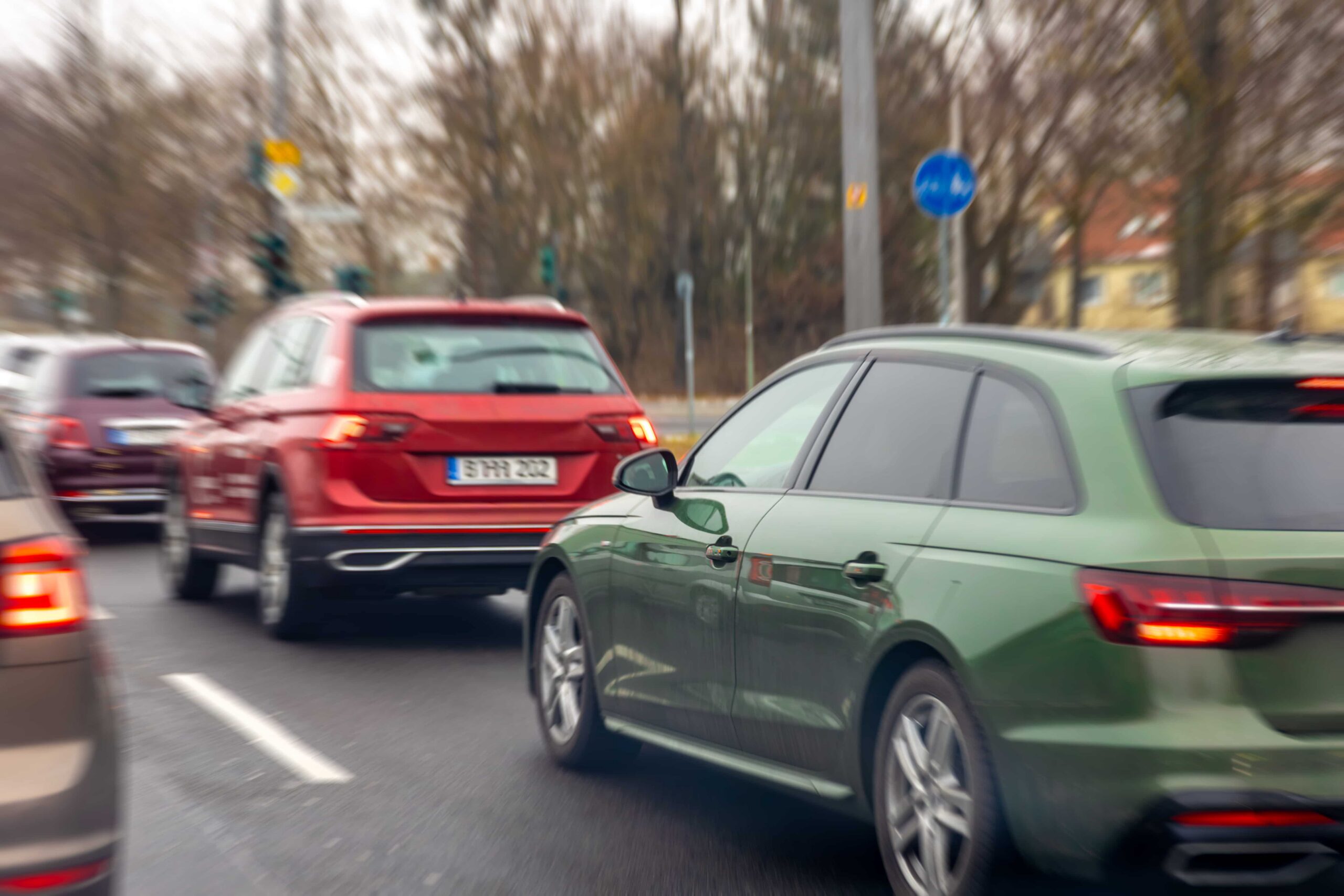
When someone rides inches off your bumper and a crash happens seconds later, it can leave you shaken, angry, and unsure what happens next. Many drivers assume rear-end accidents are always straightforward, but we often see that Arizona tailgating cases can quickly turn into disputes over aggressive driving, sudden braking, or shared fault. Injuries like whiplash, headaches, and back pain may also appear hours or days later, while insurance companies often start building their case immediately after the crash.
Tailgating and Aggressive Driving Are a Growing Problem on Arizona Roads
Tailgating and aggressive driving are common problems across Arizona, especially on busy Phoenix freeways like Loop 101 and I-10. In 2024 alone, Arizona reported 38,654 rear-end crashes, making up more than 37% of all crashes statewide. Surveys also show nearly one-third of Arizona drivers regularly experience road rage, including drivers being cut off, blocked from changing lanes, or threatened by other motorists.
In many rear-end accident cases we handle, drivers describe the same patterns every day: speeding through traffic, weaving between lanes, and riding dangerously close behind other vehicles. And while rear-end crashes are often called “minor,” many people later deal with delayed pain, missed work, vehicle repairs, and stressful insurance disputes long after the accident ends.
What Counts as Tailgating in Arizona?
In Arizona, tailgating means following another vehicle too closely for the current traffic and road conditions. Drivers must leave enough distance to stop safely if traffic suddenly slows down. That safe distance changes depending on speed, weather, visibility, and the vehicles around you, especially trucks, SUVs, and motorcycles.
Many drivers think tailgating only means riding directly on someone’s bumper. In reality, insurance companies and investigators often look closely at whether the driver behind had enough time and distance to react safely before the crash.
Why Tailgating Accidents Happen So Often
Most tailgating crashes do not happen from one small mistake. In many Arizona cases, several risky driving behaviors build up before the impact happens. Some of the most common causes include:
- Speeding through traffic
Drivers often leave themselves little time to react, especially on fast-moving roads like Loop 101, I-10, and US-60. - Distracted driving
Looking at a phone, GPS, or even traffic in another lane for a few seconds can be enough to cause a rear-end collision. - Road rage and aggressive driving
Some drivers tailgate to pressure another vehicle to move faster or change lanes. - Heavy traffic frustration
Long Phoenix commutes and stop-and-go traffic can make drivers impatient and more aggressive behind the wheel. - Trying to “teach another driver a lesson”
Many drivers describe situations where someone rode dangerously close behind them after feeling annoyed or blocked in traffic. - Assuming traffic will keep moving
Drivers sometimes expect the car ahead to keep rolling and do not prepare for sudden braking, debris, stalled vehicles, or traffic backups.
Who Is Usually at Fault in a Tailgating Accident in Arizona?
In many Arizona rear-end crashes, the driver behind is often considered at fault because Arizona law requires drivers not to follow another vehicle “more closely than is reasonable and prudent,” taking into account speed, traffic, and road conditions, under A.R.S. § 28-730. Drivers are also expected to maintain control of their vehicle and adjust their following distance based on visibility, weather, and traffic conditions. If someone follows too closely and cannot stop in time, insurance companies and investigators will usually look closely at that driver first. Still, rear-end accidents are not always automatic fault cases.
Can Both Drivers Share Fault in Arizona?
Even if another driver tailgated you, your own actions may still become part of the investigation after a crash. Insurance companies often look closely at what both drivers were doing in the seconds before impact, especially in disputed rear-end cases. Fault may become more complicated when situations involve:
- unsafe lane changes
- brake-check allegations
- aggressive driving or road rage
- distracted driving
- malfunctioning brake lights
- sudden stops without a clear hazard
For example, a driver may argue they did not have enough time to react after another vehicle suddenly cut into their lane and braked. In other cases, drivers accuse each other of aggressive behavior, speeding, weaving through traffic, or intentionally escalating the situation before the collision happens.
Arizona follows a pure comparative negligence system. That means more than one driver can share fault for the same accident. If investigators decide you were partially responsible, your compensation may be reduced by your percentage of fault.
This is one reason many people feel stressed after a tailgating accident, even when they believe the other driver caused the crash.
What If You Had to Slam on the Brakes?
Not every sudden stop comes from reckless driving. Arizona drivers sometimes have only seconds to react to a real hazard in front of them. That can include a deer running into the roadway, a child chasing a ball into the street, stopped traffic hidden around a curve, emergency vehicles ahead, or debris suddenly appearing on the freeway. In those moments, most drivers react instinctively.
Arizona law still allows drivers to respond to legitimate roadway hazards and emergencies. At the same time, under A.R.S. § 28-730, the driver behind still has a responsibility to leave enough distance to stop safely if traffic suddenly changes. Arizona drivers must also exercise reasonable care to avoid collisions under the circumstances surrounding the crash.
That is why evidence, witness statements, and the details of what happened before the crash can make a major difference in these cases.
What Evidence Helps Prove a Tailgating Accident Claim?
A lot of rear-end crashes turn into word-for-word disputes very quickly. One driver says they were tailgated. The other claims the vehicle ahead stopped suddenly or acted aggressively. That is why evidence often becomes one of the most important parts of a tailgating accident claim.
Several types of evidence may help show what really happened before impact, including:
- dashcam footage
- witness statements
- police reports
- traffic camera footage
- skid marks and debris patterns
- vehicle damage patterns
- onboard vehicle or black box data
- phone records showing possible distracted driving
- accident reconstruction analysis in more serious crashes
In brake-check allegations, evidence becomes even more important because proving intent is rarely simple. Without video footage or independent witnesses, insurance companies may struggle to determine exactly what caused the sudden braking.
The steps you take immediately after the collision can also make a major difference in protecting both your health and your claim.
What to Do After a Tailgating Accident in Arizona
The moments after a tailgating crash can feel tense and chaotic, especially if the other driver starts blaming you or acting aggressively. The steps you take afterward can make a major difference for both your health and your claim.
- Get medical attention: Rear-end crashes often cause delayed symptoms like whiplash, headaches, neck pain, and concussions that may appear hours later.
- Document the scene: Take photos or videos of vehicle damage, skid marks, lane positions, traffic conditions, and any road hazards before vehicles move, if possible.
- Preserve evidence: Save dashcam footage immediately and get witness contact information before people leave the scene.
- Be careful speaking with insurance adjusters: Avoid guessing about fault or minimizing injuries before you fully understand the situation.
- Speak with a lawyer if injuries or fault disputes are involved: Tailgating crashes can quickly turn into disputed claims, especially when drivers accuse each other of aggressive driving or sudden braking.
Even when the fault seems obvious, many drivers quickly discover that insurance companies do not always make the claims process easy.
How Insurance Companies Handle Tailgating Claims
We regularly see insurance companies treat tailgating claims as “simple” cases at first, then start questioning injuries or shifting blame once medical treatment continues. In many Arizona cases, insurers still look for ways to reduce payouts, question injuries, or shift part of the blame onto the injured driver.
This happens often in lower-speed rear-end crashes, where adjusters may argue the impact was too minor to cause serious injuries or question why symptoms appeared later. In disputed cases, they may also argue:
- the braking was unnecessary
- the stop happened too suddenly
- another unsafe maneuver contributed to the crash
That is one reason tailgating accident cases can become more complicated than many drivers initially expect.
How an Arizona Car Accident Lawyer Can Help After a Tailgating Crash
Tailgating accident claims can become complicated quickly, especially when insurance companies start disputing fault or downplaying injuries.
Our team has handled many Arizona tailgating and rear-end accident claims involving disputed fault, aggressive driving allegations, and insurance pressure. At Esquire Law, we help clients preserve evidence, handle insurance pressure, and push back against unfair blame-shifting tactics.
If you were hurt in a tailgating accident, we offer free consultations to answer your questions and explain what options may be available to you.