


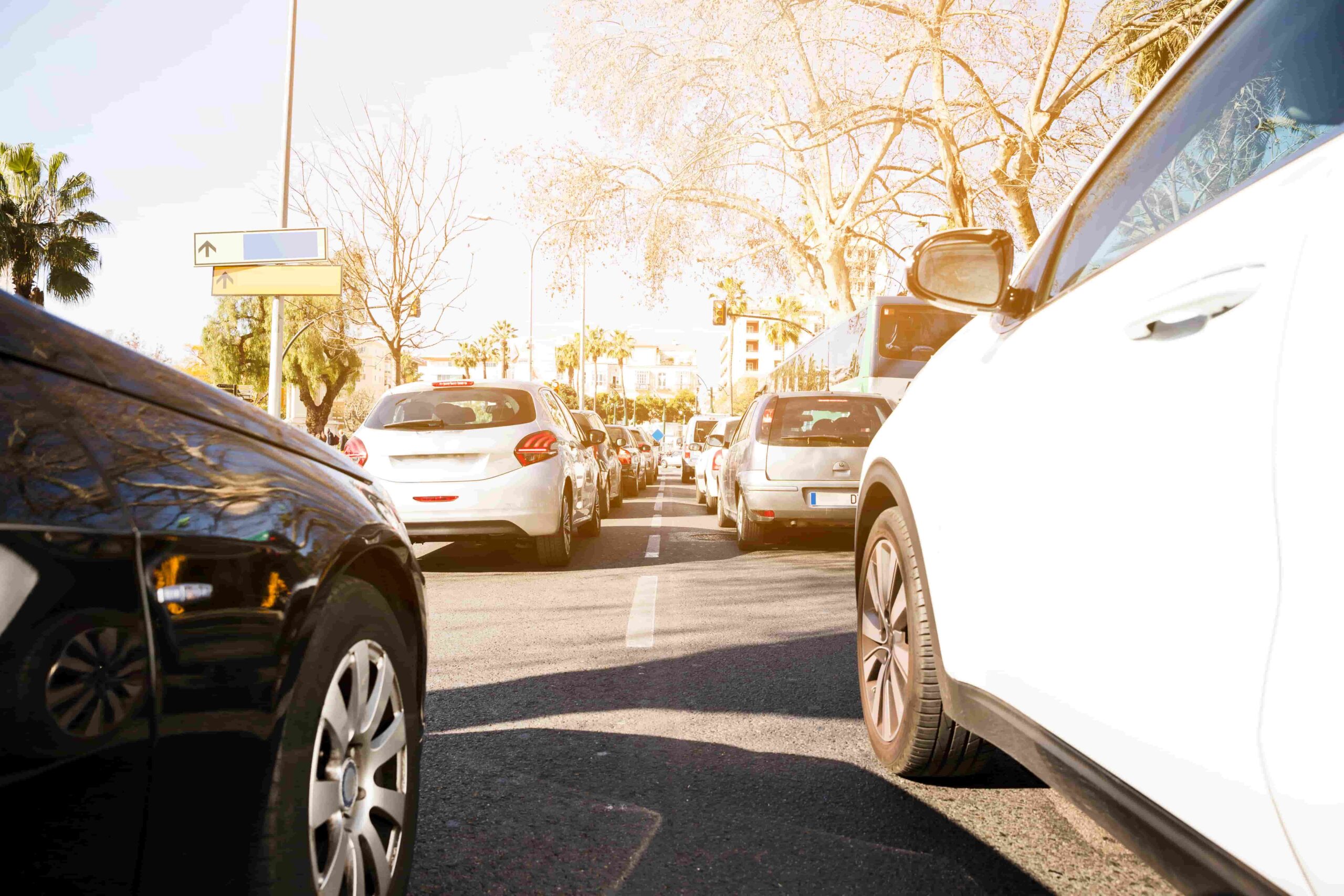
You checked your mirrors. You checked your backup camera. You looked over your shoulder before you ever touched the gas backing out of that parking spot. Then another car hits you anyway, and now an insurance adjuster is telling you it’s 50/50.
That doesn’t feel fair, and it’s one of the most common frustrations we see in parking lot claims. Drivers assume the same rules from the highway apply once they pull into a lot, and they don’t. No signals, no lane markings that carry real legal weight, no clear right-of-way most of the time. That’s exactly how two careful drivers can end up splitting fault right down the middle. We discuss all the nuances of parking lot accidents in this guide.
Quick Answers Before We Get Into Who’s At Fault in Parking Lot Accidents
Parking lot accidents raise a different set of questions than a regular fender bender out on the road. Before we get into the details, here are quick answers to what people ask us most.
Does insurance cover parking lot accident damages?
Yes, parking lot accidents are typically covered the same way as any other car accident claim, through liability or collision coverage depending on who’s at fault. Coverage doesn’t disappear just because the crash happened at low speed or on private property.
Do traffic laws apply in parking lots?
Some do, but there’s no clear right-of-way system like on a real road. Arizona’s backing statute and general negligence rules still apply, and insurance companies lean on those same standard traffic laws when they work out who was reasonable and who wasn’t.
Is the person backing up always 100% at fault?
No. Backing up does carry a higher duty of care under Arizona law, but the other driver still has to react reasonably if they had the chance. Fault often ends up shared rather than falling entirely on one side.
Do one-way arrows and painted lanes decide who’s at fault in parking lot accidents?
Not by themselves. They help traffic move in order, but they don’t carry the same legal weight as a stop sign on a real street. They factor into what counts as reasonable, not a hard rule.
Do I need to call the police for a parking lot accident, and does skipping it hurt me?
Police often won’t respond to a minor parking lot crash, especially with no injuries, and not having a report doesn’t automatically weaken your case. Photos, witness info, and your own account still carry real weight.
Those quick answers cover what people ask first, but a few Arizona statutes are doing the real work behind them.
Parking Lot Traffic Rules in Arizona
There are a few traffic laws applying on parking lot too:
A.R.S. § 28-621: Do Regular Traffic Laws Even Apply in a Parking Lot?
Arizona’s rules of the road mostly apply to what the law calls a “highway,” and that term is broader than most people think. Most shopping center and retail lots open to public traffic actually fall under that umbrella. A gated, restricted lot is a different story.
A.R.S. § 28-891: The Backing Statute Almost Every Case Comes Back To
This is the one law that shows up in nearly every parking lot claim we see. It says a driver can’t back up unless it can be done safely and without interfering with other traffic. That’s a low bar to state, but it puts real weight on the driver in reverse to know what’s around them before they move.
A.R.S. § 28-621: Reckless Driving Doesn’t Stop at the Parking Lot Line
Most traffic rules only apply on public roads, but Arizona carves out an exception for reckless driving under § 28-621, which says it applies on highways “and elsewhere” throughout the state. That reach covers parking lots too. Speeding through a lot or blowing past a stop sign in front of a store isn’t something a driver can wave off just because it happened off the main road.
A.R.S. § 28-651: No Cutting Through a Lot to Dodge Traffic Rules
This one catches drivers off guard. Arizona law specifically bans driving through private property, including parking lots, to avoid a traffic signal or get around a “no left turn” intersection. Cutting across a lot to skip a red light isn’t just risky, it is its own violation on top of whatever accident it might cause.
Those statutes cover the legal groundwork, but the real answers show up in how these accidents actually play out.
Common Parking Lot Accident Scenarios and Who Usually Carries Fault
Every parking lot accident has its own story, and small details can shift who ends up holding more of the blame. We see these parking lot accident patterns most often in our experience:
Two Cars Backing Out at the Same Time
This is the scenario we hear about in our practice more than any other. Both drivers owe the same duty to back up only when it’s safe and clear, which is exactly why adjusters often land on a 50/50 split by default. That percentage can still shift with the right evidence, like proof one driver moved first, ignored a marked one-way lane, or never signaled. Dashcam footage helps too, though someone still has to establish who moved first for it to settle much.
One Car Backing Out, One Car Already Driving Through the Lane
The backing driver carries the heavier duty of care, and adjusters usually start there. But heavier doesn’t mean automatic. The driver moving through the lane still has to react if they had a reasonable chance to avoid the crash, and speeding through or driving distracted can shift some blame their way too.
Hit-and-Run and Hitting a Parked, Unoccupied Car
These two situations are really flip sides of the same law. If someone hits your parked, unoccupied car and drives off, Arizona requires them to find you or leave written notice, and skipping that duty is a class 1 misdemeanor under A.R.S. § 28-664. When the driver can’t be identified, your own collision coverage is often the practical path to getting the damage repaired, and the statute of limitations doesn’t pause just because they fled.
If you’re the one who backs into or sideswipes an empty parked car, fault generally falls on you as the moving vehicle, even if that car was parked somewhere it shouldn’t have been. Illegal parking can factor into the conversation, but it rarely erases fault entirely, and § 28-664 still requires you to notify the owner rather than drive off.
Knowing which pattern fits your accident helps, but it only goes so far.
Is a 50/50 Insurance Decision in Parking Lot Accidents Final?
A 50/50 letter feels like the end of the road. It isn’t. That first call is based on whatever the adjuster had at the time, usually just both drivers’ statements and a few photos. It’s not a court ruling, and it’s not final.
New evidence can move that split. Witness statements, dashcam or security footage, and in tricky timing cases, even an accident reconstruction expert, can all add clarity an adjuster didn’t have at first. None of this guarantees a different outcome, but plenty of people accept a 50/50 split simply because they didn’t know they could push back. And you do need that.
A few actions right after the accident can help you to do it strongly.
What to Do at the Scene of a Parking Lot Accident
Right after even a small fender bender, most people feel a mix of adrenaline and confusion. A few simple steps in those first minutes can make a real difference later.
- Take Photos of Everything
Get pictures of both vehicles before anyone moves them, if it’s safe to leave them in place. Capture the damage up close, then step back and get the final resting positions of both cars. Those wider shots often end up mattering more than people expect, since they can show which direction each car was facing and how far someone had backed out. - Get the Other Driver’s Information, Even If It Looks Minor
A small scrape today can turn into a bigger repair bill once someone gets a real estimate. Get the other driver’s name, phone number, insurance information, and license plate before you leave. Don’t skip this step just because the damage looks like nothing. - Decide Whether to Call the Police
Many police departments won’t send anyone out for a minor parking lot crash with no injuries, especially in a busy city like Phoenix. That doesn’t mean you shouldn’t try. Calling still creates a record of the incident, and even if no officer responds, the call itself can help later. - Get Witness Information If Anyone Saw It Happen
Passengers in either car, other shoppers, or anyone nearby who saw the accident can back up your version of events. Ask for their name and phone number before they walk off. An independent witness with nothing to gain from the outcome can carry a lot of weight if the other driver’s story doesn’t match yours. - Ask Nearby Businesses for Security Footage
Parking lots at retail centers, restaurants, and grocery stores almost always sit under a security camera pointed at the lot. That footage can settle a fault dispute in a way photos alone can’t. Before you leave, walk into the closest stores and ask if they’re willing to share what their cameras caught. Move on this quickly, as most businesses only hold footage for a short window, sometimes just a few days, before the system overwrites it.
Handling these steps well sets you up for everything that comes next, from the insurance conversation to the fault decision itself. If your fault decision doesn’t sit right with you, or you’re still early in a parking lot claim and not sure what to document, getting legal help might help you.
When You Might Need a Lawyer for a Parking Lot Accident
Not every parking lot fender bender needs an attorney. If the damage is minor, both insurance companies agree on fault, and nobody got hurt, you can often handle it on your own. However, a few situations tend to call for more help.
If you’re facing a fault split that doesn’t match what actually happened, especially with witnesses or footage backing you up, that’s worth a conversation. The same goes for anyone injured, even if it felt minor at the time, since injuries from a low-speed parking lot impact can show up days later. A hit-and-run where the other driver never gets identified, a claim involving a car you don’t personally own or insure, or an insurance company pushing back hard on your version of events are all good reasons to get a second opinion before you settle for whatever number lands on the table
Every Case Comes Down to Its Own Facts
Parking lots don’t come with clear right-of-way rules, and that’s exactly why fault gets complicated so often. Two careful drivers can still end up splitting blame, and two drivers who both feel certain they weren’t at fault can walk away with completely different insurance outcomes. What actually happened in your specific situation, down to who moved first and what evidence backs it up, is what decides your case.
At Esquire Law, our car accident lawyers have spent years handling Arizona accident claims, and parking lot disputes are ones we see constantly. We can’t promise a different result before we know your facts, but we can help you understand what you’re dealing with and what your options actually are. If you’re stuck with a fault decision that doesn’t feel right, or you’re not sure what to do next, reach out for a free case evaluation. We’re here to help you sort through it.