


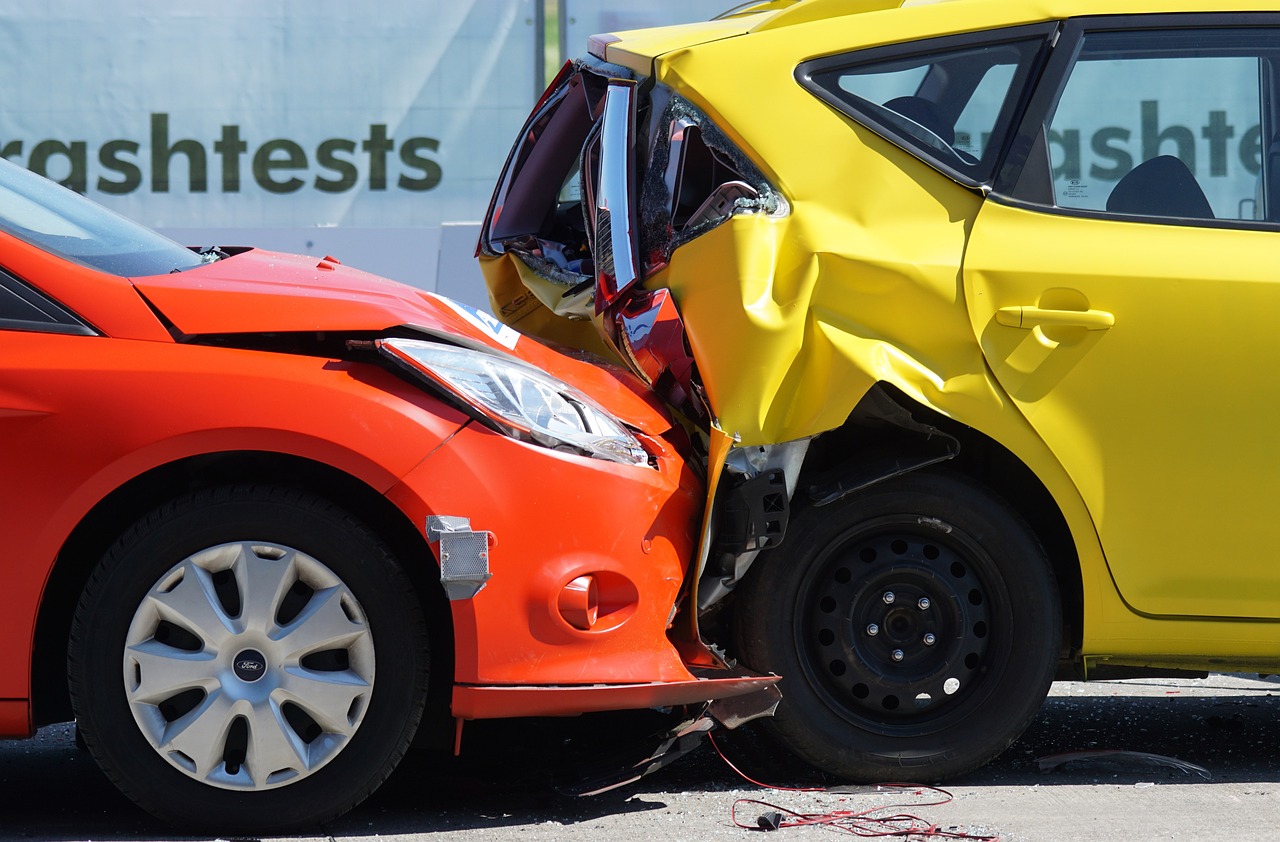
A three-car rear-end collision can turn an ordinary day into a chaotic whirlwind of questions, damages, and finger-pointing. Who’s responsible? How do insurance claims work when multiple vehicles are involved? These crashes happen often enough on Phoenix-area freeways and busy Arizona intersections that most drivers will encounter one eventually, whether they’re the one who got hit or the one caught in the middle. In this article, we’ll break down everything you need to know about navigating the aftermath of a three-car pile-up, so you’re prepared to handle the situation with confidence.
What Is a 3-Car Rear-End Collision?
A three-car rear-end collision occurs when one vehicle strikes another, causing a chain reaction that involves a third car. These collisions typically fall into distinct types:
- chain-reaction crashes, where the rear-most vehicle initiates the impact;
- multi-lane collisions, involving vehicles pushed into adjacent lanes;
- and high-speed pile-ups, often seen on highways.
Such accidents frequently occur in high-traffic areas, at intersections with sudden stops, or during poor weather conditions where braking is compromised.
Common causes include tailgating, distracted driving, sudden braking, and hazardous road conditions. Vehicle malfunctions, such as faulty brakes, or erratic driving behaviors like abrupt lane changes, can also contribute to these accidents.
According to ADOT’s 2024 Motor Vehicle Crash Facts report, rear-end impacts accounted for 38,654 crashes involving multiple vehicles that year, more than 37% of all multi-vehicle crashes statewide, making it the single most common way these crashes happen. Congested Phoenix-area freeway stretches see this play out regularly. ADOT has flagged a heavily traveled section of I-10 between the Deck Park Tunnel and the I-10/I-17 split as one of the state’s most crash-prone corridors, carrying up to 35,000 vehicles during peak hours. That kind of stop-and-go volume is exactly the setup that turns one driver’s sudden stop into a three-car chain reaction.
Knowing how these crashes tend to happen is one thing. Figuring out who actually pays for one, once three insurance companies get involved, is where things get complicated.
Who Is At Fault In A Rear-End Collision Involving 3 Cars
Determining fault in a three-car rear-end collision can be complicated, as liability may involve one, two, or all three drivers. In many cases, the rear-most driver is held responsible for initiating the chain reaction by failing to maintain a safe distance or reacting too late. However, the fault isn’t always so clear-cut.
Legally, the sequence of impacts is critical in determining liability, with courts often assessing each driver’s actions leading up to the accident. The fault is assessed based on negligence, which can involve factors like speeding, distracted driving, or failing to maintain proper vehicle conditions.
Liability generally starts with the driver in the rear. Arizona traffic law expects every driver to leave enough space to stop safely, and courts start from that assumption when they look at a chain-reaction crash. That assumption doesn’t end the analysis, though. Each driver’s actions in the moments before impact can shift fault, sometimes onto more than one person.
Let’s examine potential at-fault parties and liabilities in various scenarios involving three-car crashes.
When the First Vehicle Driver Is at Fault
The vehicle in front may be at fault if they engage in actions that create a hazardous situation, such as stopping abruptly without reason, failing to use turn signals, or reversing into the vehicles behind them. Brake-checking, where a driver intentionally slams on the brakes to provoke a rear-end collision, can also place liability on the first driver. Additionally, if the lead vehicle has non-functioning brake lights or other mechanical defects, the responsibility for the crash could shift to them. Establishing this type of fault often requires eyewitness testimony, dashcam footage, or evidence of vehicle conditions.
When the Second Vehicle Driver Is at Fault
The middle driver may share or hold full liability if they fail to maintain a safe following distance from the lead car or are driving while distracted. In these cases, the second driver’s negligence can result in the vehicle being pushed into the first car, even if the rear-most driver also contributed to the collision. For example, if the middle driver is speeding or tailgating the lead vehicle, their actions can compound the impact and damages. Liability here often depends on accident reconstructions and whether the second driver could have avoided the crash despite being hit from behind.
When the Third Vehicle Driver Is at Fault
In multi-vehicle accidents, courts may assign full or partial fault to the third driver if evidence shows they were speeding, distracted, or driving under the influence. Even in cases where the lead and middle drivers were stationary, the rear-most driver’s negligence typically plays the most significant role in initiating the collision. Dashcam footage and skid marks are key in determining whether the rear driver had an opportunity to avoid the crash.
When Other Parties Are at Fault
Liability isn’t always limited to the drivers involved. In some cases, third parties like commercial vehicle operators, municipalities, or vehicle manufacturers can share responsibility. For example, a poorly maintained road with hidden hazards could place a fault in the municipality. Similarly, if a commercial truck driver causes a pile-up due to fatigue or poorly secured cargo, their employer might be held accountable. Vehicle defects, such as faulty brakes or steering systems, can also shift liability to manufacturers. These scenarios often require expert testimony and specialized investigations to prove fault. Liability determination may also vary depending on the type and where the three-car crash occurs.
Chain Reaction Collisions
In a standard chain reaction crash, the rear-most driver is usually held liable for failing to stop in time, causing the second vehicle to hit the first. However, if the middle driver was tailgating or braking suddenly without cause, they may also bear responsibility.
Multi-Car Pile-Ups
In larger-scale pile-ups, liability often becomes shared due to the chaotic nature of the collisions. Weather conditions, such as icy roads or fog, may reduce driver control and create legal defenses against sole liability. However, a negligent driver speeding or failing to adjust to road conditions may still carry significant responsibility.
Evidence shapes all of this. Police reports, crash scene photos, and expert accident reconstructions often play a key role in unraveling fault, which is exactly why acting quickly to preserve that evidence matters. Consulting with an experienced car accident attorney ensures you gather and present the strongest case, and it also puts someone in your corner who understands how Arizona law divides fault once it’s determined.
Arizona Laws Governing Three-Car Rear-End Collisions
The laws governing three-car rear-end collisions vary by state, but common legal principles apply across the United States to determine liability and compensation. Most states follow a negligence-based system, where the driver who failed to exercise reasonable care is held responsible for the damages caused.
Arizona follows a comparative negligence system under Arizona Revised Statutes, where each party involved in the collision is assigned a percentage of fault. So liability in multi-car collisions can become shared. If the middle driver stopped too suddenly or was tailgating the lead car, they may share the fault. Additionally, if the lead driver engaged in reckless actions, such as unnecessary braking or failing to signal, they could also bear responsibility.
Even if a victim is partially responsible, they can still recover compensation, reduced by their percentage of fault. Arizona also requires drivers to carry minimum liability insurance, but victims may rely on their own uninsured motorist coverage if another driver lacks adequate insurance. Arizona’s two-year statute of limitations for personal injury and property damage claims means victims must act quickly to file a lawsuit or risk losing their right to compensation.
Fault and coverage rules set the boundaries. What actually happens inside those boundaries, in terms of what a claim is worth, depends on a different set of factors entirely.
Average Settlements for Three-Car Rear-End Collisions
Settlements for three-car rear-end collisions vary based on injury severity, property damage, and liability. On average, settlements range from $15,000 to $50,000 for moderate injuries, while severe injuries, disabilities, or fatalities can lead to payouts in the six- or seven-figure range.
A three-car crash rarely involves just one insurance company writing one check. Once fault is apportioned, whether that’s 100% on one driver or split across two or three, each insurer typically pays its share based on the percentage of fault assigned to their policyholder. That means your claim may involve negotiating with more than one adjuster at the same time, and each of them will be looking for ways to shift blame toward another driver rather than their own client.
Factors that affect your compensation in a three-car collision
Every case comes down to its own facts, but these are the factors that typically shape what a claim is worth:
- Severity of injuries — whiplash and soft tissue injuries sit on one end, while spinal injuries, herniated discs, or traumatic brain injuries carry significantly more weight
- Property damage and repair costs, including hidden damage to electronics or sensors that isn’t obvious at the scene
- Lost wages and any impact on your ability to work going forward
- Pain and suffering, which depends heavily on documentation and how consistently you’ve followed medical treatment
- Your percentage of fault — under Arizona’s comparative negligence law (A.R.S. § 12-2505), your recovery is reduced by whatever percentage of fault you’re assigned, even if that percentage is small
- Available insurance coverage across every at-fault party, since a claim can only recover as much as the combined policy limits allow, plus any underinsured motorist coverage you carry
There’s no way to know where a specific case lands on any of this without digging into the medical records, the coverage available, and how fault gets divided. That’s the work an attorney does before ever putting a number in front of an insurance company.
Understanding what shapes a claim’s value matters. Protecting that value starts in the minutes right after the crash, not weeks later once the story’s already been told to an adjuster.
What to Do After a Three-Vehicle Rear-End Collision
Taking the right steps after a three-vehicle rear-end collision is crucial to protect your health, rights, and ability to seek compensation. Here’s what you should do:
- Check for Injuries: Ensure your safety and check if others are injured. Call 911 immediately if there are injuries or significant damage.
- Move to Safety: If possible, move your vehicle out of traffic to a safe location, but only if it’s safe to do so.
- Call the Police: Report the accident to law enforcement. A police report can be critical for determining fault and filing a claim.
- Document the Scene: Take photos of all vehicles, damage, license plates, skid marks, road signs, and any visible injuries. Capture the overall accident scene from multiple angles.
- Exchange Information: Collect contact details, insurance information, and license numbers from all involved drivers. Also, speak to witnesses and get their contact details for later statements.
- Seek Medical Attention: Even if you feel fine, get checked by a doctor. Injuries like whiplash or concussions may not show symptoms immediately.
- Notify Your Insurance Company: Inform your insurer about the accident, but avoid providing a recorded statement without consulting an attorney first.
- Consult a Lawyer: A lawyer can help you navigate the claims process, deal with insurance adjusters, and identify all responsible parties, especially in multi-vehicle collisions.
- Preserve Evidence: Keep all documentation related to the accident, including medical records, repair estimates, and correspondence with insurance companies.
- Act Quickly: Be aware of your state’s statute of limitations for filing a personal injury or property damage claim, as delays can impact your ability to recover compensation.
- File Your Insurance Claim: Notify your insurer promptly and provide them with evidence, such as the police report and photos. Multi-vehicle claims can be complex, as liability may involve several parties. Ensure your claim highlights the actions of other drivers to establish their responsibility. If insurance coverage is insufficient, you may need to rely on your uninsured or underinsured motorist coverage.
Taking these steps ensures your rights are protected and strengthens your case for the compensation you deserve. Even so, coordinating claims across multiple insurers is one of the more time-consuming parts of a multi-vehicle case, and it’s exactly the kind of work an attorney handles so you’re not the one stuck managing three separate adjusters while you’re trying to recover.
Why a Lawyer’s Help Is Valuable in a Three-Vehicle Rear-End Collision
Three-vehicle rear-end collisions are inherently complex, often involving disputed liability, multiple insurance companies, and significant damages. Determining fault isn’t always straightforward—responsibility may rest with the rear-most, middle, or lead driver, depending on factors like tailgating, sudden braking, or reckless actions. At Esquire Law, our car accident attorneys are experienced in thoroughly analyzing evidence such as police reports, witness statements, and crash scene photos to identify the negligent parties and build a strong case on your behalf.
Navigating Arizona’s comparative negligence laws can be particularly challenging. Your compensation may be reduced if you’re found partially at fault, but our attorneys work tirelessly to ensure you aren’t unfairly blamed. We fight for full compensation, covering your medical expenses, property damage, lost wages, and pain and suffering.
Our team also investigates potential third-party liability, such as defective brakes, improper vehicle maintenance, or hazardous road conditions, to ensure all responsible parties are held accountable. With the added complexities of dealing with multiple insurers, having experienced legal representation is critical.
At Esquire Law, we are committed to protecting your rights and securing the settlement you deserve. Let us handle the legal challenges so you can focus on recovery.